Coming home after a knee operation, especially one performed abroad, raises a very practical question: what should actually happen, week after week, as your knee heals? The first six weeks set the tone for your mobility, your confidence and your ability to spot a problem early. This guide walks you through the usual milestones of knee operation recovery, the signs that are considered normal, and those that justify contacting a medical professional quickly.
Direct answer: During the first six weeks after knee surgery, you typically progress from assisted walking and swelling management in week one, to supervised rehabilitation and better mobility in weeks two and three, and then to a gradual return to driving, work and light activities between weeks four and six. According to the AAOS recovery timeline after knee replacement, many patients resume most normal daily activities within 3 to 6 weeks, though exact timing depends on your surgery type, your surgeon’s protocol and your personal healing.
Important medical note: This article offers general information for international patients and does not replace the personalized advice of your surgeon or physiotherapist. Any sharp pain, abnormal swelling, fever or wound change should be discussed with a healthcare professional.
What happens during the first week after knee surgery?
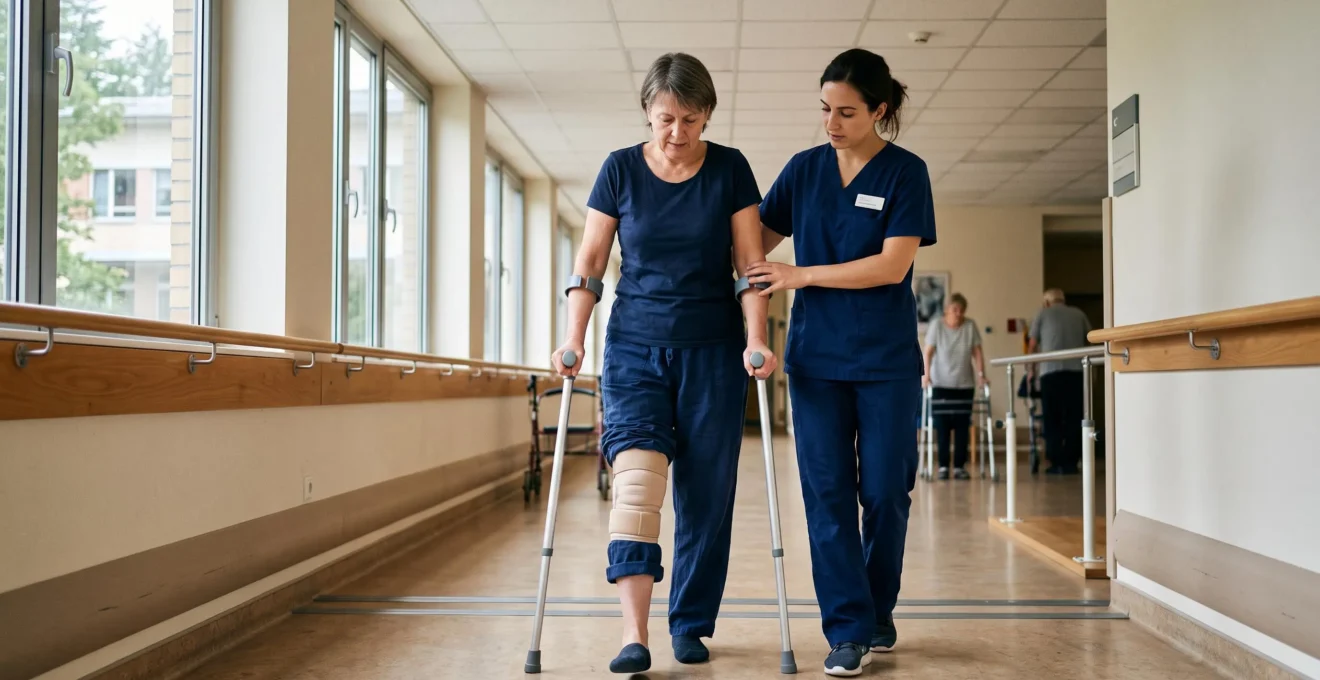
The first week after a knee operation is dominated by three priorities: controlling pain, reducing swelling and getting you back on your feet, safely. In most protocols, you are encouraged to stand and take your first steps within hours of the surgery, usually with crutches or a walker and the help of a physiotherapist. These first movements are not about distance; they are about reactivating circulation and reducing the risk of complications such as blood clots.
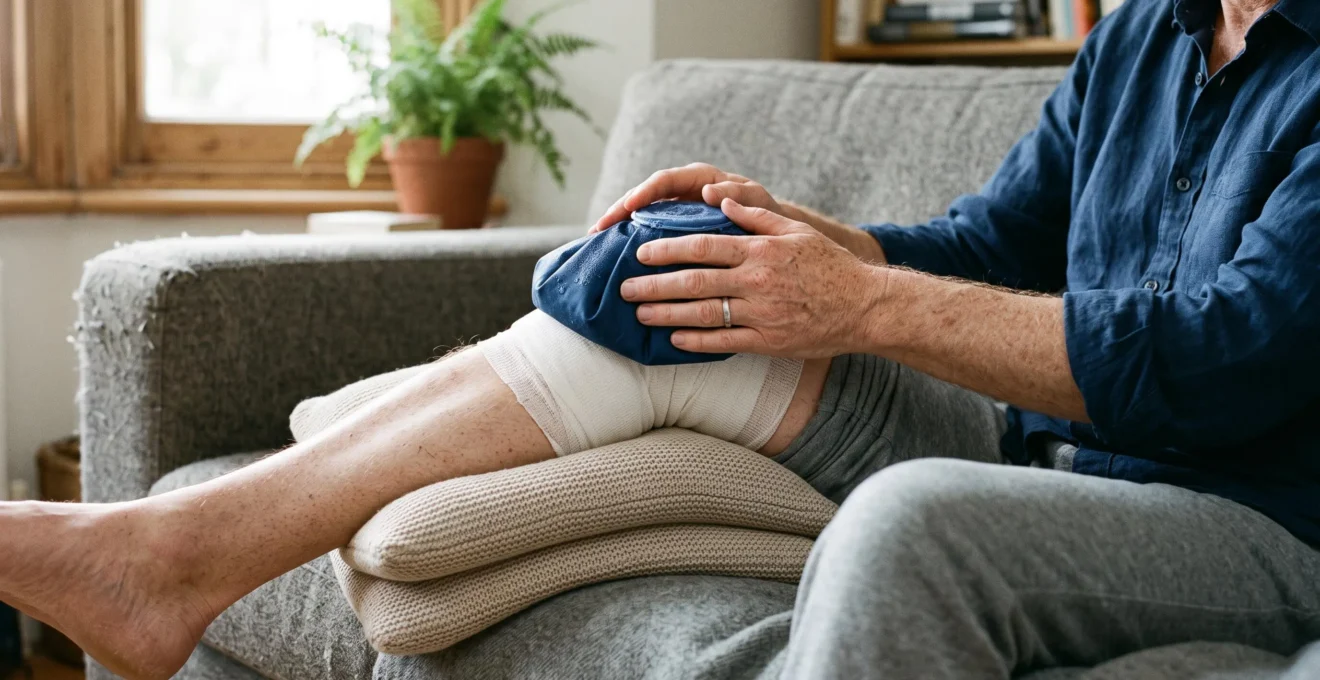
At home, the daily rhythm often looks similar from one patient to another: short, frequent walks around the room, long periods with the leg elevated, and regular use of a cold pack to limit swelling. Pain is expected during this phase, usually described as deep, mechanical and worse at the end of the day. If you had your procedure abroad, you can keep in touch with your surgical team through a structured follow-up such as the one offered by Pr. Etienne Cavaignac, which is designed specifically for international patients returning home shortly after the operation.
Key milestones of week one
- Stand and walk short distances with crutches or a walker.
- Manage pain with the prescribed medication and ice.
- Elevate the leg frequently to reduce swelling.
- Keep the wound clean and dry, following your surgeon’s instructions.
- Perform the basic exercises prescribed (ankle pumps, gentle quadriceps contractions).
How does rehabilitation differ by type of knee surgery?
The exact milestones at weeks 2 and 3 depend heavily on the type of operation. After a total knee replacement, patients usually continue partial weight-bearing with crutches and work toward bending the knee close to 90 degrees. After an ACL reconstruction, the focus is often on controlling swelling, regaining full extension and progressively loading the leg, while high-impact movements remain forbidden for several months. After an arthroscopy, recovery can be faster, with earlier removal of crutches.
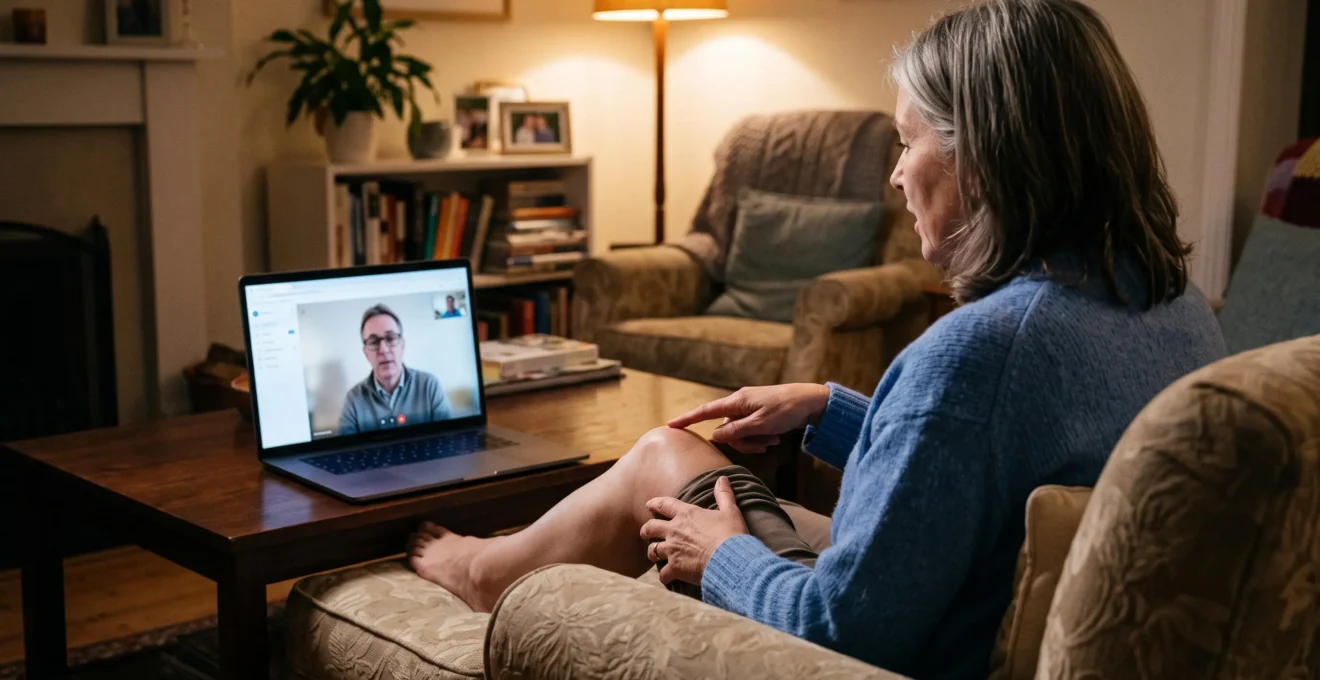
Whatever your surgery, this is the stage where remote follow-up proves particularly useful. A short video consultation can confirm that your range of motion, your gait and your wound are evolving as expected, and quickly flag any delay that would otherwise go unnoticed between in-person appointments.
Weeks 4 to 6: when can you return to daily activities?
Between weeks four and six, most patients clearly feel the shift from “recovering” to “rebuilding”. Walking becomes more fluid, stairs become possible (first with help, then alone), and endurance improves. The AAOS indicates that patients generally resume most normal activities of daily living within 3 to 6 weeks following a total knee replacement, but adds that exact milestones vary with the patient, the surgeon’s protocol and the type of surgery.
Returning to driving, work and light sports is one of the most frequent questions at this stage. There is no universal answer, because the decision depends on which knee was operated, whether you drive a manual or automatic car, the type of surgery, your pain level and your ability to perform an emergency stop safely. The sensible rule is simple: resume an activity only when your surgeon has authorized it and when you can perform it without pain or hesitation.
To visualize how timelines can differ between two common procedures, the following table summarizes typical return milestones. These are indicative orientations, not personal medical advice.
| Activity | Total knee replacement | ACL reconstruction |
|---|---|---|
| Walking without crutches | Often around weeks 3 to 6, with surgeon approval | Often around weeks 2 to 4, with surgeon approval |
| Driving (automatic, right knee operated) | Usually discussed from weeks 4 to 6 | Usually discussed from weeks 4 to 6 |
| Office / remote work | Often possible from weeks 2 to 4 | Often possible from weeks 1 to 3 |
| Physical or standing work | Typically several weeks to months later | Typically several weeks to months later |
| Low-impact sport (bike, swimming) | Progressively from week 6 onward with approval | Progressively from week 6 onward with approval |
During this phase, low-impact exercises become central: stationary cycling with low resistance, pool walking once the wound is fully healed, controlled strengthening of the quadriceps and hip muscles, and balance work. These exercises rebuild the muscle lost during the first weeks and protect the joint for the long term. Running, jumping and pivoting sports are usually not appropriate before several months, especially after ligament reconstruction.
Warning signs that require medical attention
Learning to distinguish normal post-operative discomfort from a warning sign is one of the most reassuring steps of recovery. Most symptoms during the first six weeks are expected: moderate pain, stiffness in the morning, visible bruising, temporary swelling after activity, a feeling of warmth around the knee. According to the AAHKS guidance on normal healing versus infection signs, occasional redness or warmth around the knee can even be considered normal for several months after a knee replacement.
Other symptoms, however, call for an urgent medical opinion. They do not always mean something serious is happening, but they should never be ignored, especially when you are far from your surgeon.
Normal signs vs. warning signs after knee surgery
- Moderate pain decreasing week after week.
- Mild to moderate swelling after activity, improving with rest and ice.
- Bruising spreading down the leg.
- Occasional warmth or slight redness around the scar.
- Morning stiffness improving with movement.
- Fever, chills or feeling generally unwell.
- Increasing redness, warmth or cloudy drainage from the wound.
- Sudden, severe pain or swelling, especially after days of improvement.
- Calf pain, chest pain or shortness of breath.
- A knee that gives way, locks, or feels suddenly unstable.
Hypothetical case
Three weeks after a knee replacement performed abroad, a patient notices that her knee feels warm and slightly red, with mild swelling at the end of the day. There is no fever, no drainage from the wound, and the pain is actually less intense than the previous week. This pattern is consistent with normal healing and can usually be discussed at the next scheduled follow-up. In contrast, if the same patient suddenly develops a fever of 38.5°C, cloudy drainage from the scar and increasing pain, this combination fits the warning signs described by public health authorities and should trigger an immediate call to a healthcare professional.
How a structured follow-up supports your recovery abroad?
Recovering from a knee operation in one country while your surgical team is in another can feel intimidating, but it is now a well-established practice when the follow-up is properly structured. The key is not to be physically close to your surgeon every week; it is to have a clear protocol, scheduled check-ins and a direct channel to raise concerns between appointments.
A structured remote follow-up typically combines three ingredients. First, a shared rehabilitation plan with milestones you and your local physiotherapist can follow week by week. Second, scheduled video consultations where your surgeon can assess your range of motion, your gait and your wound. Third, a defined contact procedure for warning signs, so you know exactly who to call and when, instead of hesitating in front of symptoms you cannot interpret alone.
- Book your local physiotherapist in advanceChoose a professional before your surgery and share your surgeon’s rehabilitation protocol with them.
- Plan your video consultationsSchedule the first teleconsultation during the first weeks, then at the key milestones defined by your surgeon.
- Keep a short recovery journalNote your pain level, swelling, range of motion and any unusual symptom to share during each follow-up.
- Know your emergency contactsIdentify a local doctor you can reach quickly if a warning sign appears between consultations.
If you are preparing or have already undergone a knee operation abroad and want a clearer view of what a structured follow-up can look like, you can explore the dedicated international patient pathway to understand how surgery and remote rehabilitation are coordinated.
When can I drive again after knee surgery?
The timing depends on the operated knee, the type of car, the type of surgery and your ability to perform an emergency stop safely. Driving is often discussed between weeks four and six after a knee replacement or an ACL reconstruction, but only your surgeon can confirm when it is appropriate for you.
Is it normal to still have swelling after one month?
Yes, moderate swelling that fluctuates during the day can persist for several weeks and sometimes months, especially after prolonged standing or walking. It becomes a concern when it increases suddenly, is associated with intense pain, redness, drainage or fever.
When should I contact my surgeon urgently?
Contact a healthcare professional quickly in case of fever, cloudy wound drainage, increasing redness, sudden severe pain or swelling, calf pain, shortness of breath or a knee that becomes unstable. These signs do not always indicate a serious problem, but they need a medical opinion without delay.
Can I follow my knee rehabilitation entirely from home?
Most patients combine in-person physiotherapy sessions close to home with remote consultations with their surgical team. This hybrid approach keeps hands-on rehabilitation available locally while ensuring that your surgeon continues to monitor your progress and detect any complication early.
Your first six weeks after a knee operation will not look exactly like anyone else’s, and that is normal. What matters is to recognize the typical milestones, respect the limits of each phase, and know who to contact when a sign goes beyond ordinary post-operative discomfort. With a clear timeline in mind and a structured follow-up around you, recovering far from your surgeon becomes a manageable project rather than a source of daily worry.