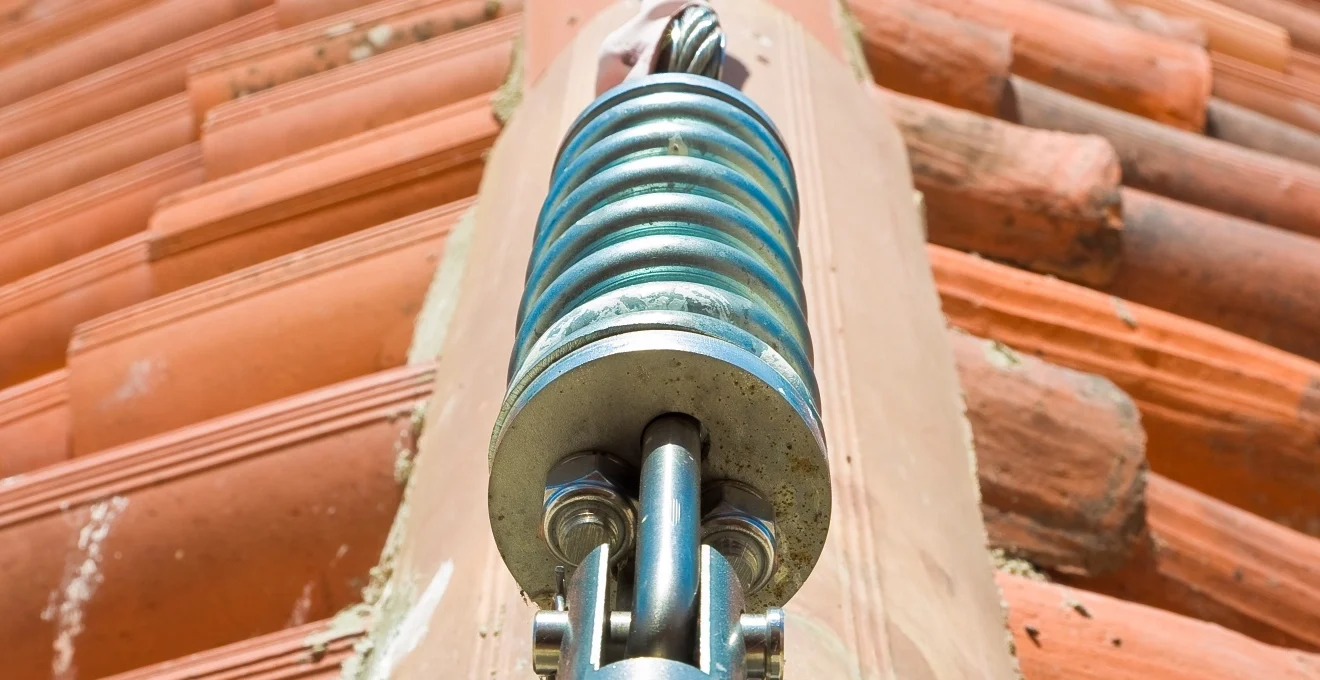
The roofing industry has witnessed a paradigm shift in recent years, with steep slope projects demanding increasingly sophisticated fall protection solutions. Modern commercial roofing applications require anchor systems that not only meet stringent safety standards but also enhance operational efficiency across complex architectural configurations. The integration of advanced anchor technologies has become essential for contractors managing multi-level installations, where traditional safety measures often fall short of providing adequate protection.
Contemporary steep slope projects present unique challenges that extend far beyond basic fall arrest requirements. Professional roofing teams must navigate intricate geometries, varying substrate materials, and demanding installation timelines while maintaining unwavering safety standards. The evolution of roof anchors has directly addressed these challenges, offering modular solutions that adapt to diverse project specifications without compromising structural integrity or worker protection.
Osha-compliant permanent roof anchor systems for commercial steep slope applications
Permanent anchor systems represent the gold standard for commercial steep slope applications, providing long-term reliability that surpasses temporary solutions in both safety performance and cost-effectiveness. These systems undergo rigorous testing protocols to ensure compliance with OSHA standards, particularly the demanding requirements outlined in 29 CFR 1926.502. The investment in permanent anchoring infrastructure typically yields substantial returns through reduced installation time on subsequent maintenance operations and enhanced worker confidence during complex roofing procedures.
The selection criteria for permanent anchor systems must account for environmental factors specific to steep slope applications. Wind uplift forces, thermal expansion cycles, and moisture infiltration present ongoing challenges that require careful consideration during the design phase. Professional installers increasingly rely on engineered solutions that incorporate weather-resistant materials and corrosion-resistant fastening systems to ensure decades of reliable performance.
Guardian fall protection CB-44 chemical anchor installation protocols
The Guardian Fall Protection CB-44 system exemplifies precision engineering in chemical anchor technology, utilizing advanced epoxy formulations that cure to strengths exceeding 4,000 pounds per square inch. Installation protocols require specific drilling depths and hole cleanliness standards that directly impact the anchor’s ultimate holding capacity. Professional installers must adhere to temperature-controlled curing schedules, as ambient conditions significantly influence the chemical bonding process between the anchor and substrate material.
Field testing data demonstrates that properly installed CB-44 anchors consistently exceed ANSI Z359.18 requirements by margins of 25-30%. This performance advantage becomes particularly valuable in steep slope applications where dynamic loading conditions can stress anchor points beyond typical static calculations. The system’s compatibility with various concrete densities makes it suitable for diverse commercial construction scenarios.
MSA latchways constant force post anchors for metal roofing systems
MSA Latchways constant force technology addresses the unique challenges presented by metal roofing substrates, where thermal expansion can create significant stress variations throughout daily temperature cycles. The system’s spring-loaded mechanism automatically adjusts tension to maintain optimal lifeline performance across temperature ranges exceeding 100 degrees Fahrenheit. This adaptive capability proves essential for maintaining consistent fall protection performance in commercial applications where rooftop temperatures can fluctuate dramatically.
Installation efficiency receives considerable enhancement through the system’s pre-engineered mounting brackets, which accommodate standard metal roofing profiles without requiring custom fabrication. The constant force mechanism reduces maintenance requirements by eliminating the need for seasonal tension adjustments, a common concern with traditional cable-based systems in metal roofing applications.
3M DBI-SALA SecuraSpan HLL anchor point load distribution methods
The SecuraSpan horizontal lifeline system employs sophisticated load distribution algorithms that automatically redirect fall arrest forces across multiple anchor points during dynamic loading events. This distributed loading approach significantly reduces individual anchor stress while maintaining system integrity throughout the arrest sequence. Engineering calculations demonstrate that proper load distribution can reduce peak anchor forces by up to 40% compared to single-point arrest systems.
Advanced tensioning mechanisms within the SecuraSpan system maintain optimal cable geometry across varying span lengths, ensuring consistent deflection characteristics that meet OSHA clearance requirements. The system’s modular design allows for complex routing configurations that accommodate architectural features common in commercial steep slope projects, including dormers, chimneys, and mechanical equipment installations.
Falltech 7414 concrete wedge anchor specifications for tile roof substrates
Tile roof substrates present unique anchoring challenges due to the underlying concrete deck thickness variations and reinforcement patterns common in commercial construction. The Falltech 7414 wedge anchor system addresses these challenges through variable expansion geometry that adapts to concrete densities ranging from 2,500 to 4,000 PSI. Installation specifications require precise embedment depths that account for tile thickness and underlying membrane systems to ensure adequate concrete engagement.
Testing protocols for tile roof applications must verify both pullout resistance and lateral shear capacity, as steep slope installations generate multi-directional loading patterns during fall arrest scenarios. The 7414 system consistently demonstrates holding capacities exceeding 5,000 pounds when installed according to manufacturer specifications, providing substantial safety margins for commercial applications.
Advanced horizontal lifeline integration techniques for Multi-Level roof configurations
Multi-level roof configurations demand sophisticated horizontal lifeline systems that can navigate elevation changes while maintaining continuous fall protection coverage. These installations require careful consideration of deflection angles, intermediate support requirements, and clearance calculations that account for the three-dimensional geometry typical of complex commercial buildings. The integration of advanced tensioning systems and energy-absorbing components becomes essential for managing the dynamic forces generated during fall arrest events across varying elevations.
Modern horizontal lifeline systems incorporate intelligent routing capabilities that allow workers to traverse complex roof geometries without disconnecting from the safety system. This continuous connection approach significantly reduces the risk exposure associated with traditional clip-on, clip-off procedures that create momentary gaps in fall protection coverage. The efficiency gains from continuous coverage systems often justify the additional engineering and installation costs through reduced project completion times and enhanced safety compliance.
Professional installation teams report up to 35% improvement in productivity when utilizing continuous horizontal lifeline systems compared to traditional anchor point configurations.
Kee safety kee line temporary horizontal lifeline tensioning systems
Kee Safety’s temporary horizontal lifeline systems utilize precision-engineered tensioning mechanisms that maintain optimal cable geometry throughout the installation period. The system’s quick-connect features allow rapid deployment across complex roof configurations, with installation times typically ranging from 15-30 minutes depending on span length and intermediate support requirements. Tensioning protocols ensure consistent deflection characteristics that meet OSHA clearance requirements while accommodating the dynamic loading conditions typical of steep slope work environments.
The modular design philosophy enables system customization for project-specific requirements, including varying span lengths and multiple elevation changes within a single installation. Field data indicates that properly tensioned Kee Line systems maintain consistent performance characteristics across temperature ranges exceeding 80 degrees Fahrenheit, ensuring reliable operation throughout extended project durations.
Miller SkyGrip temporary rooftop anchor positioning for complex geometries
Miller SkyGrip positioning systems address the challenges associated with irregular roof geometries through adjustable anchor configurations that adapt to varying substrate conditions. The system’s versatility becomes particularly valuable in renovation projects where existing architectural features constrain traditional anchor placement options. Engineering analysis demonstrates that strategic anchor positioning can reduce system deflection by up to 25% compared to conventional linear arrangements.
Complex geometry applications benefit from the system’s ability to accommodate non-standard spacing patterns while maintaining structural integrity throughout the anchor network. The positioning flexibility allows contractors to optimize anchor locations based on substrate strength variations and architectural constraints, ensuring maximum holding capacity across diverse installation scenarios.
Capital safety AccuSafe Winch-Operated lifeline deployment on steep pitches
Winch-operated deployment systems provide precise control over lifeline positioning during steep pitch installations, where gravity-assisted deployment can create dangerous slack conditions. The AccuSafe system’s mechanical advantage reduces operator effort by approximately 60% compared to manual positioning methods, while providing consistent tension control throughout the deployment process. This precision becomes essential for maintaining proper clearance calculations on steep slopes where small positioning errors can compromise fall protection effectiveness.
The system’s ratcheting mechanism allows incremental tension adjustments that accommodate varying load conditions throughout the project timeline. Field testing demonstrates that winch-operated systems maintain more consistent lifeline geometry compared to manually tensioned alternatives, particularly during extended installation periods where thermal effects can alter cable characteristics.
Xsplatforms mobile anchor cart systems for large commercial projects
Mobile anchor cart systems revolutionize large commercial project logistics by providing repositionable fall protection that moves with the work progression. XSPlatforms designs incorporate counterweight systems that maintain stability across varying roof slopes while providing anchor capacities exceeding 5,000 pounds. The mobility aspect reduces installation time by eliminating the need for multiple fixed anchor points across expansive roof areas.
Cart-based systems demonstrate particular value in repetitive installation scenarios, such as solar array mounting or large-scale roofing replacement projects. Productivity measurements indicate that mobile systems can reduce fall protection setup time by up to 50% compared to traditional fixed anchor installations, while maintaining equivalent safety performance throughout the project duration.
Structural load analysis and fall clearance calculations for steep slope anchoring
Structural load analysis for steep slope anchoring requires comprehensive understanding of both static and dynamic force distributions that occur during fall arrest scenarios. The complexity increases significantly when dealing with pitched surfaces, as gravitational forces create additional vector components that must be accounted for in anchor design calculations. Professional engineers utilize sophisticated modeling software to predict load paths and stress concentrations, ensuring that anchor installations can withstand forces that may exceed 5,000 pounds during worst-case arrest scenarios.
Fall clearance calculations become particularly critical in steep slope applications where the natural pendulum effect during a fall can significantly increase required clearance distances. Traditional clearance formulas often underestimate the additional distance required when workers fall from elevated positions on pitched surfaces. Advanced calculation methods must account for the parabolic trajectory that occurs when initial fall vectors combine with gravitational acceleration, often requiring clearance distances that exceed standard specifications by 15-20%.
The integration of energy-absorbing devices into steep slope anchor systems requires careful analysis of deceleration forces and their impact on both the worker and the anchor system. Modern shock absorbers can reduce peak arrest forces from potentially lethal levels exceeding 4,000 pounds to survivable loads under 1,800 pounds. However, the energy absorption process extends the arrest distance, requiring additional clearance calculations that account for the complete deceleration sequence.
Engineering analysis demonstrates that proper clearance calculations can prevent up to 85% of secondary impact injuries that occur when workers strike lower surfaces during fall arrest sequences.
Advanced structural analysis techniques now incorporate finite element modeling to predict anchor performance under various loading scenarios. These computational methods allow engineers to optimize anchor placement and sizing for specific building geometries, often revealing that strategic positioning can reduce required anchor capacity by 20-30% while maintaining equivalent safety performance. The analysis must also consider long-term factors such as material fatigue and environmental degradation that can affect anchor performance over the system’s operational lifetime.
Specialized anchor solutions for clay tile, slate, and metal standing seam roofing
Clay tile roofing systems demand specialized anchoring approaches that preserve the integrity of both the waterproofing membrane and the decorative tile overlay. The challenge lies in creating secure attachment points without compromising the roof system’s ability to shed water effectively. Modern tile anchor systems utilize precision-engineered penetration sealing technologies that maintain watertight integrity while providing anchor capacities exceeding 3,000 pounds. Installation protocols require careful attention to tile removal and replacement procedures that prevent cracking or displacement of adjacent tiles during anchor installation.
Slate roofing presents unique challenges due to the material’s tendency to fracture along natural cleavage planes when subjected to concentrated loads. Specialized slate anchors distribute loading forces across multiple attachment points, effectively creating a load-sharing network that prevents localized stress concentrations. The installation process requires skilled craftspeople who understand slate’s structural characteristics and can identify optimal attachment locations that avoid weak points in the stone matrix.
Metal standing seam systems offer advantages for anchor installation through their inherent structural design, which provides convenient attachment points along the raised seam profiles. However, thermal expansion considerations become critical, as metal roofing can experience dimensional changes exceeding 2 inches across typical commercial building spans. Anchor systems must accommodate this movement without compromising either the waterproofing integrity or the anchor’s holding capacity. Advanced standing seam anchors incorporate sliding mechanisms that allow thermal movement while maintaining constant clamping force on the seam structure.
The selection of appropriate fastening methods for each roofing material requires consideration of both immediate installation requirements and long-term performance expectations. For example, stainless steel fasteners may be essential in coastal environments where salt air accelerates corrosion, while standard galvanized hardware may suffice for inland installations. Material compatibility analysis prevents galvanic corrosion that can compromise anchor integrity within months of installation , particularly in mixed-metal configurations common in commercial roofing applications.
| Roofing Material | Anchor Capacity (lbs) | Installation Time (minutes) | Lifespan (years) |
|---|---|---|---|
| Clay Tile | 3,000-4,500 | 45-60 | 25-30 |
| Slate | 2,500-3,500 | 60-90 | 30-50 |
| Standing Seam Metal | 4,000-6,000 | 20-35 | 20-25 |
Installation efficiency optimization through Pre-Engineered anchor layouts and modular systems
Pre-engineered anchor layouts represent a transformative approach to steep slope fall protection, utilizing computer-aided design tools to optimize anchor placement before project commencement. This methodology reduces on-site decision-making time while ensuring optimal coverage patterns that maximize worker mobility throughout the roof area. Advanced layout software can process building plans and generate anchor specifications that account for architectural features, structural limitations, and regulatory requirements, often reducing planning time by 60-70% compared to traditional field-based design approaches.
Modular anchor systems enhance installation efficiency through standardized components that interchange across diverse project requirements. The modular approach eliminates the need for custom fabrication in most applications, allowing contractors to maintain inventory of standard components that serve multiple project types. Field data indicates that modular systems reduce installation time by an average of 35% while providing superior consistency in anchor performance across different installations.
The integration of Building Information Modeling (BIM) technology into anchor system design allows for precise coordination between roofing contractors and structural engineers during the planning phase. BIM-enabled anchor layouts can identify potential conflicts with structural members, mechanical systems, and architectural features before mobilization, preventing costly field modifications that can delay project completion. This coordination capability becomes particularly valuable in complex commercial projects where multiple trades must coordinate their work around the fall protection infrastructure.
Industry analysis reveals that pre-engineered anchor systems reduce total project time by an average of 15-20% while improving safety compliance rates by over 40%.
Quality control protocols for modular systems benefit from standardized installation procedures that reduce variability between different installation crews. Training programs can focus on consistent techniques that apply across various project types, improving both installation quality and crew efficiency. The standardization also enables more accurate project scheduling, as installation times become more predictable across different building configurations and site conditions.
Advanced modular systems incorporate quick-connect technologies that eliminate threaded connections and complex adjustment procedures common in traditional anchor systems. These innovations can reduce individual anchor installation time from 30-45 minutes to under 15 minutes in many applications. The time savings compound across large commercial projects where dozens of anchor points may be required to provide comprehensive fall protection coverage.
The evolution of steep slope anchor systems continues to drive improvements in both safety performance and installation efficiency. Modern systems represent sophisticated engineering solutions that address the complex challenges inherent in commercial roofing applications, from basic worker protection to comprehensive project management optimization. As building designs become increasingly complex and safety standards continue to evolve, the anchor systems that support these projects must demonstrate corresponding advances in capability and reliability.